Коллекция ковров
Документированные ковры азербайджанских ковровых школ из открытых музейных коллекций и фотографий в общественном достоянии: ткацкие традиции, у которых учится ILMƏ.
 Эталон · не XalçaID
Описание на Wikimedia Commons
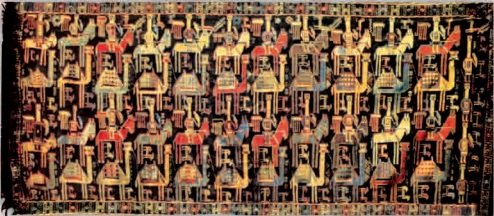
Azerbaijani "Shadda" carpet from Karabakh with a camel caravan.
 Эталон · не XalçaID
Описание на Wikimedia Commons
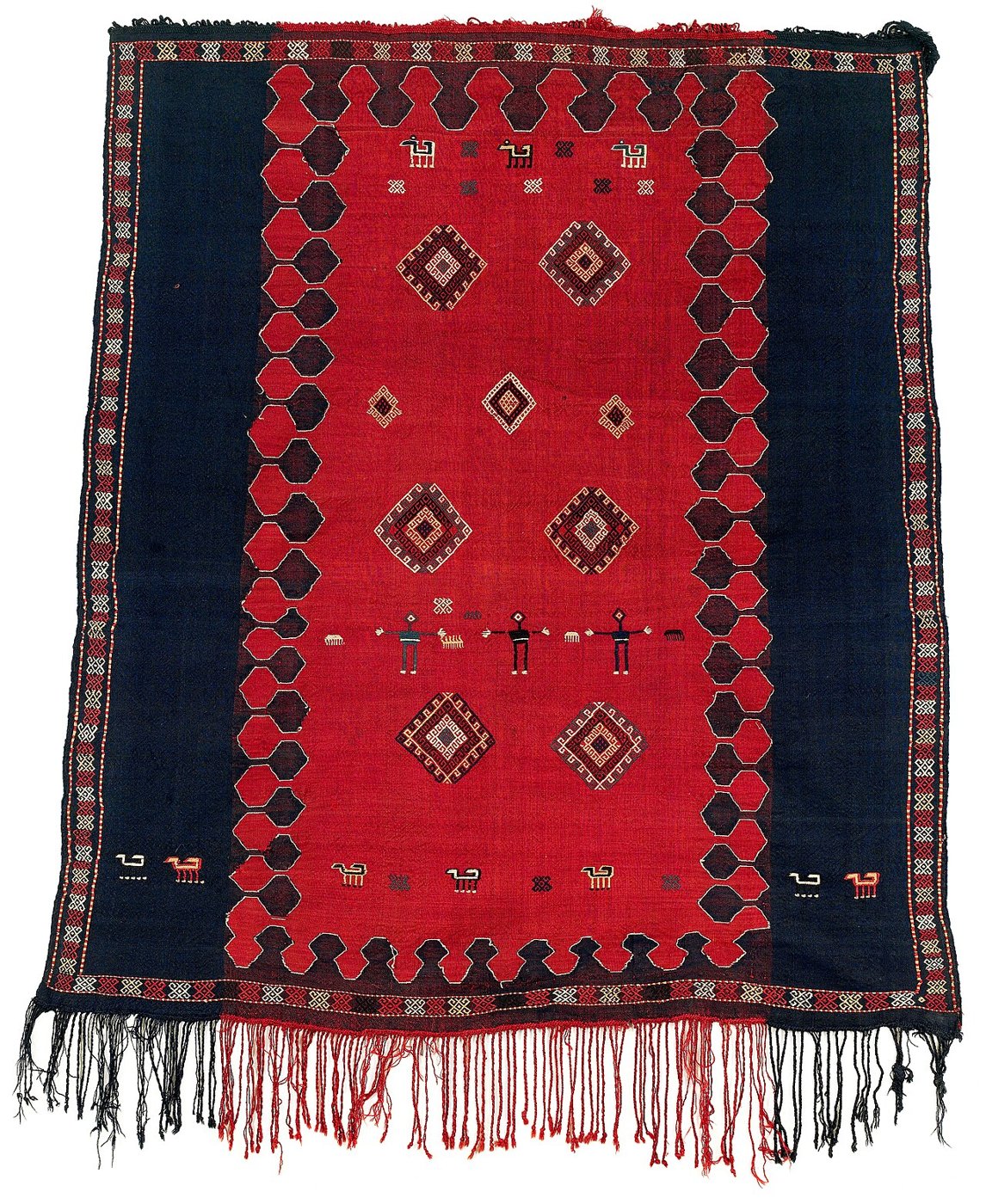
Collection VOK: Caucasus - Persia 22 The exceptional quality of this red- and blue-ground Azeri cover (shadda) is striking. The ground is very finely woven, and the designs in the sumakh and brocading techniques are drawn with care. Six nested diamonds and three smaller diamonds adorn the field. The upper and lower ends of the field present a row of three and seven four-legged animals respectively, while three human figures depicted below the centre stretch out their arms horizontally as if attempting to join hands. The open red field and the wide, deep blue lateral sections are interlocked by large reciprocal trefoils outlined in white. Formerly in the Chapman Collection, Chicago, the cover was presented in 1969 at the influential flatweave exhibition, "From the Bosporus to Samarkand. Flat-Woven Rugs" at the Washington Textile Museum. Later it was acquired by Bernheimer, the Munich art dealers, where Vok purchased it. – Very good condition. Literature: AMPE, PATRICK & RIE, Textile Art. A personal choice (Kailash Gallery). Antwerp 1994, no. 31 Published: LANDREAU, ANTHONY N. & PICKERING, W. R., From the Bosporus to Samarkand. Flat-Woven Rugs. (Textile Museum exhibition catalogue) Washington, D.C. 1969, no. 112 *** VOK, IGNAZIO, Vok Collection. Anatolia. Kilims and other Flatweaves from Anatolia. (Text by Udo Hirsch) Munich 1997, no. 39 From: South Caucasus, Azerbaijan Dimensions: 197 x 162 cm Age: Second half 19th century Result EUR7,320.00
 Эталон · не XalçaID
Описание на Wikimedia Commons
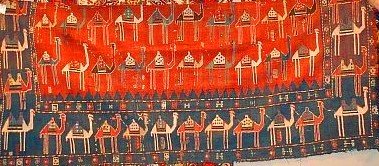
Azerbaijanian "Shadda" carpet attributed to Karabagh, more specifically to Lombaran in the Barda district, to the East of Nagorny Karabagh.
 Эталон · не XalçaID
Описание на Wikimedia Commons
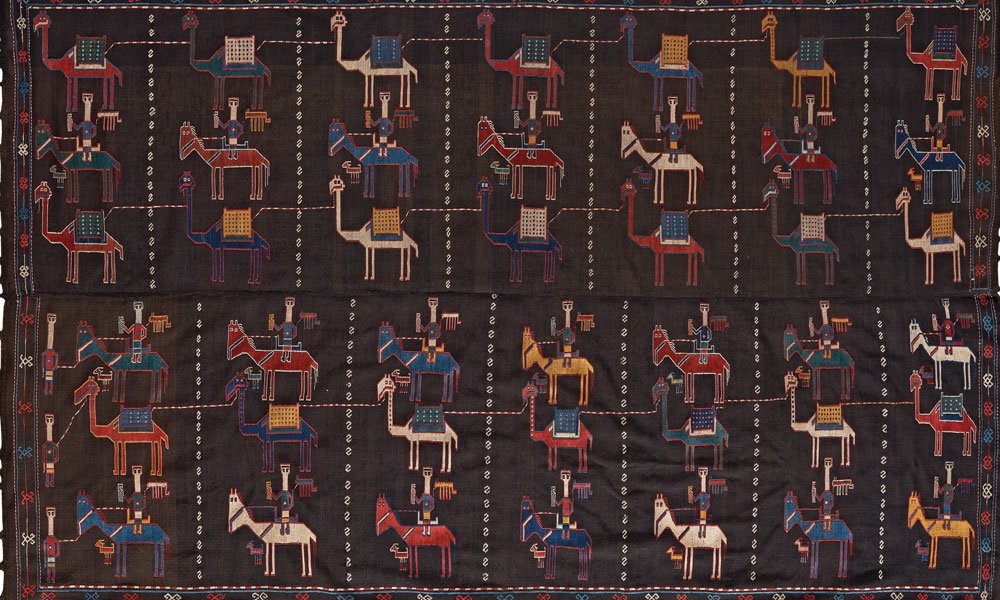
Shadda (detail), Karabagh region, southwest Caucasus, early 19th century. Wool with cotton highlights, supplementary weft weave on plainwoven foundation, 1.65 x 2.83 m (5′ 5″ x 9′ 3″ ). Wincor collection. Of the two shaddas in the exhibition, one had recently been seen at Christie’s, London where it had been the subject of close scrutiny (detail above). This time the piece had received the additional blessing of Eberhart Herrmann, who had included it in 1995 in his Asiatische Teppich- und Textilkunst 5, and had sent the collector an indepth cosmological appreciation of its design. Its remarkable condition is one of the many surprises of this cover, which is a rare addition to this group of iconic flatweaves by virtue of its single-colour ground, sparsely decorated rows of camels and riders, as well as a prominent depiction of the camel riding saddle referred to as asidda in Arabic, a corruption of which allegedly gave us the term shadda. It is interesting that the riders are in this case more prominent than the camel train and that each rider has a hawk, a dog and another quadruped.